 2026 8th International Conference on Human-Centered Computing and Data Intelligence (HCC 2026)
2026 8th International Conference on Human-Centered Computing and Data Intelligence (HCC 2026)
2026 8th International Conference on Human-Centered Computing and Data Intelligence (HCC 2026)
|
Keynote Speaker 1 |
|
|
|
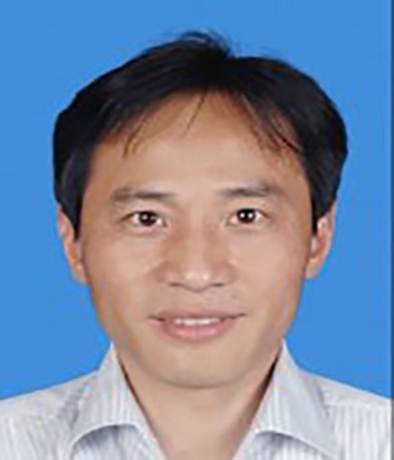
Prof. Chang Qin Huang |
|
Brief Introduction: Changqin Huang (Member, IEEE) received the PhD degree in computer science from Zhejiang University, China, in 2005. He completed his visiting research with the University of California, Irvine, CA, USA, in 2011, and La Trobe University, Melbourne, VIC, Australia, in 2018. He is currently a tenured professor with Zhejiang University and distinguished professor with Zhejiang Normal University, and the director of the Key Laboratory of Intelligent Education Technology and Application of Zhejiang Province, China. He has authored or coauthored several papers in leading journals such as IEEE Transactions on Pattern Analysis and Machine Intelligence, IEEE Transactions on Image Processing, IEEE Transactions on Knowledge and Data Engineering, C&E, CHB, and BJET. His research interests include machine learning to Big Data in education and intelligent education. Dr. Huang is a Guangdong specially appointed professor (pearl river scholar) and an associate editor for the IEEE TLT. |
|
Keynote Speaker 2 |
|
|
|
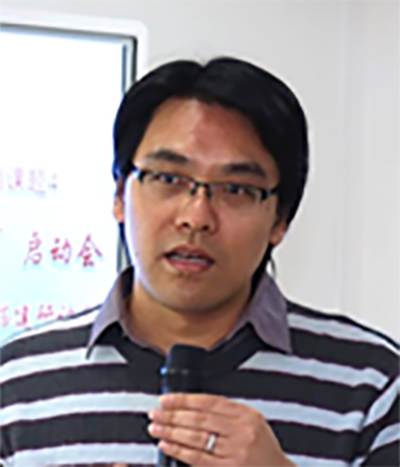
Prof. Tun Lu |
|
Brief Introduction: Tun Lu is an Associate Professor at the School of Computer Science, Fudan University, Shanghai, China. He earned his B.S. in 2000, M.S. in 2003 and Ph.D. in 2006, all in Computer Science, from Sichuan University, Chengdu, China. He was a visiting scholar at HCI Institute, CMU, USA, from 2014.9 – 2015.8. His current research interests include CSCW, collaborative and social computing and HCI. More specifically, he has been exploring a comprehensive research methodology by combining computer science and social science, and focusing on designing and developing innovative collaborative models, techniques and algorithms to efficiently support large-scale HCC systems, and devising and utilizing advanced machine learning and statistical learning analytical methods for big social data to understand and explain emerging collective or crowdsourced intelligent behaviors. Dr. Lu endeavors building practical and harmonious HCC systems such as ubiquitous monitoring & management systems for sustainable public buildings and multimodal interactive systems for vulnerable and disabled people, which have been continuously impacting the real world. His research is supported by NSF of China, Ministry of Science and Technology of China, Ministry of Education of China, Science and Technology Commission of Shanghai Municipality, etc. RESEARCH INTERESTS Computer Supported Cooperative Work (CSCW), Collaborative and Social Computing, Human-Computer Interaction (HCI), Ubiquitous Computing |
|
Keynote Speaker 3 |
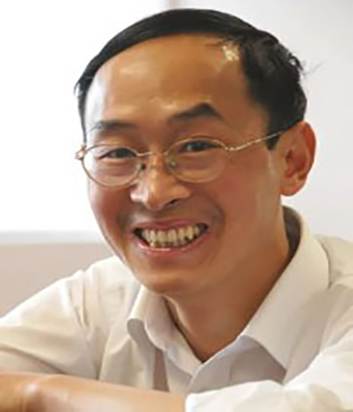
Prof. Hepu Deng
RMIT University,Australia
Brief Introduction: Professor Hepu Deng's research interests are in the areas of decision analysis, intelligent systems, digital business, knowledge management, electronic government, e-learning, and their applications in business. The multi-disciplinary nature of his research and the emphasis on both theoretical and applied research are exemplified by numerous refereed publications in top refereed international journals listed in the Science Citation Index, Social Science Citation Index, Engineering Compendex Index, and at major refereed international conferences, including Journal of Operational Research Society, European Journal of Operational Research, Computers and Operations Research, International Journal of Approximate Reasoning, IEEE Transactions on Systems, Man, and Cybernetics, Government Information Quarterly, Expert Systems with Applications, Computers and Mathematics with Applications, Fuzzy Information and Engineering, International Journal of E-Government Research, Journal of Systems and Information Technology, and Management Research Review.
Hepu is active in the international academic community. He acted as the Program Chair of several IEEE international conferences in Fuzzy Systems, Knowledge Discovery, Artificial Intelligence, and Computational Intelligence in 2009, 2010, 2011, 2012 and 2013, respectively. He was the Publicity Chair for five IEEE international conferences in China and Singapore (including the 9th IEEE International Conference on Neural Information Processing (2002), the 4th Asia-Pacific Conference on Simulated Evolution and Learning (2002), and the 2002 International Conference on Fuzzy Systems and Knowledge Discovery) and has been an organisation committee member for numerous other international conferences. He was and is currently a referee for many prestigious international journals, including Fuzzy Sets and Systems, International Journal of Approximate Reasoning, European Journal of Operational Research, IEEE Transactions on Fuzzy Systems, International Journal of Computers and Industrial Engineering, Information Sciences, Computers and Operations Research, International Journal of Production Economics, Journal of Computational Intelligence in Finance, Journal of Operations Management, and International Journal of Knowledge and Information Systems.
Hepu is experienced in working and teaching at tertiary education in a cross-culture environment. After graduation and working as a mathematics teacher in a high school he became an assistant lecturer and then lecturer in the Department of Business, Wuhan University of Science and Technology, China. He started at the School of Computing and Information Technology, Monash University in July 1998 as a lecturer and was appointed to the School of Business IT at RMIT in 2000.